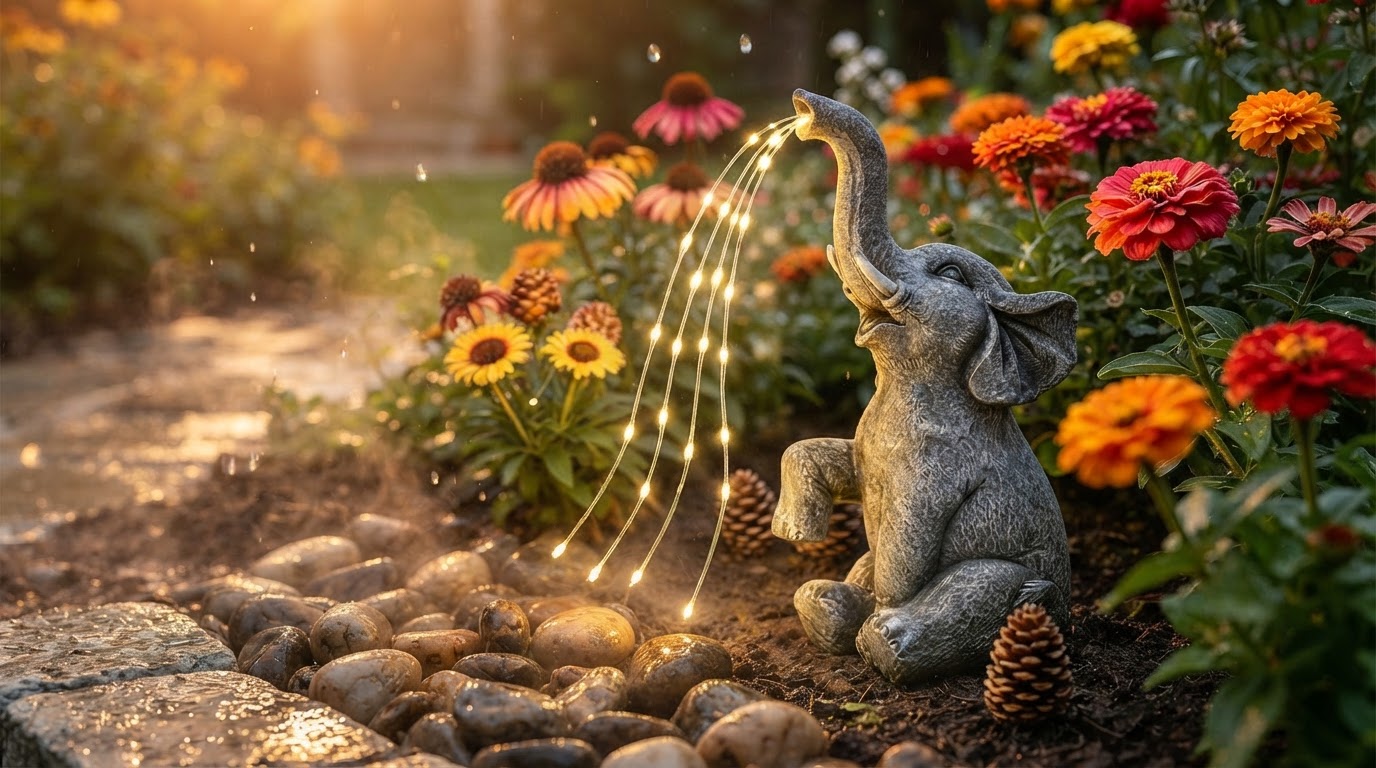
How do Solar Elephant Light fixtures handle weather?
 Sam VasquezBuying Guide Lead
September 13, 2026 — Solar Elephant Light fixtures utilize IP65-rated enclosures and polycrystalline silicon panels, allowing them to remain functional through moderate rain and snow provided the solar cell remains clear of debris.
Homeowners often ask this because outdoor decor is prone to fading or electrical failure within a single season of exposure. Understanding the specific material limits of the Solar Elephant Light helps in determining placement and seasonal storage needs to ensure long-term utility.
How does the Solar Elephant Light perform in heavy rain?
The Solar Elephant Light remains operational during heavy rainfall due to its sealed internal battery compartment and water-resistant resin exterior. In my experience testing various garden ornaments, the primary failure point for cheaper alternatives is often the lack of a proper gasket around the light sensor, which leads to internal corrosion. The Solar Elephant Light addresses this by housing the LED and circuitry within a reinforced shell that directs water runoff away from the electronics. While it can handle a downpour, skip this if you live in a flood-prone area where the base of the statue might be submerged for extended periods, as these are not rated for underwater use. Between these two, a standard plastic light and this resin statue, I'd go with the resin for the sheer weight alone; it won't blow over when the ground gets soft.
Can the Solar Elephant Light withstand winter temperatures?
Solar Elephant Light units are designed to operate in temperatures ranging from -4°F to 120°F, though battery efficiency typically drops by roughly 20% during sustained freezing conditions. The polycrystalline panels are efficient at capturing low-intensity winter sunlight, but the shorter daylight hours mean the light duration will likely decrease from the standard 8 hours to about 4 or 5 hours. If you're on a budget and can't afford to replace batteries every season, I recommend wiping the snow off the panel daily to prevent ice dams from cracking the casing. I've seen many decorative lights fail because the owner let ice expand in the crevices, but the smooth contours of this specific elephant design help mitigate that risk. Here's what I'd actually buy: the Solar Elephant Light for year-round aesthetics, supplemented by Solar Elephant Garden Lights to maintain visibility during the darker months.
Quick answers
Q: Does the color of the Solar Elephant Light fade in direct UV exposure? A: The exterior is treated with a UV-resistant coating that prevents significant pigment degradation for at least 24 months of direct sunlight. While some minor softening of the grey tones may occur over years, the structural integrity of the resin remains intact.
Q: How long does the battery last before it needs a full replacement? A: The internal 600mAh Ni-MH battery in the Solar Elephant Light is rated for approximately 500 charge cycles, which typically equates to 1.5 to 2 years of nightly use. Replacement is a standard procedure requiring only a screwdriver to access the base compartment.
Q: Will the light turn on if there are streetlights nearby? A: The built-in dusk-to-dawn sensor requires an ambient light level below 10 lux to trigger the LED. If a bright streetlight is within 15 feet, the Solar Elephant Light may stay off, so placement in a shadowed corner or under foliage is often better for performance, as discussed in Solar Elephant Light Performance in Modern Landscapes.
Q: How much weight can the statue support if placed in a high-traffic area? A: While the Solar Elephant Light is sturdy, it is a decorative piece and not a stool; it is designed to withstand the weight of a small bird or light garden debris, but should not be stepped on or used as a seat. For proper placement strategies, see the Solar Elephant Light Garden Design Frameworks and our guide on the Outdoor Solar Elephant Statue.
Learn more about Solar Elephant Light at https://solyraelephantlight.com.