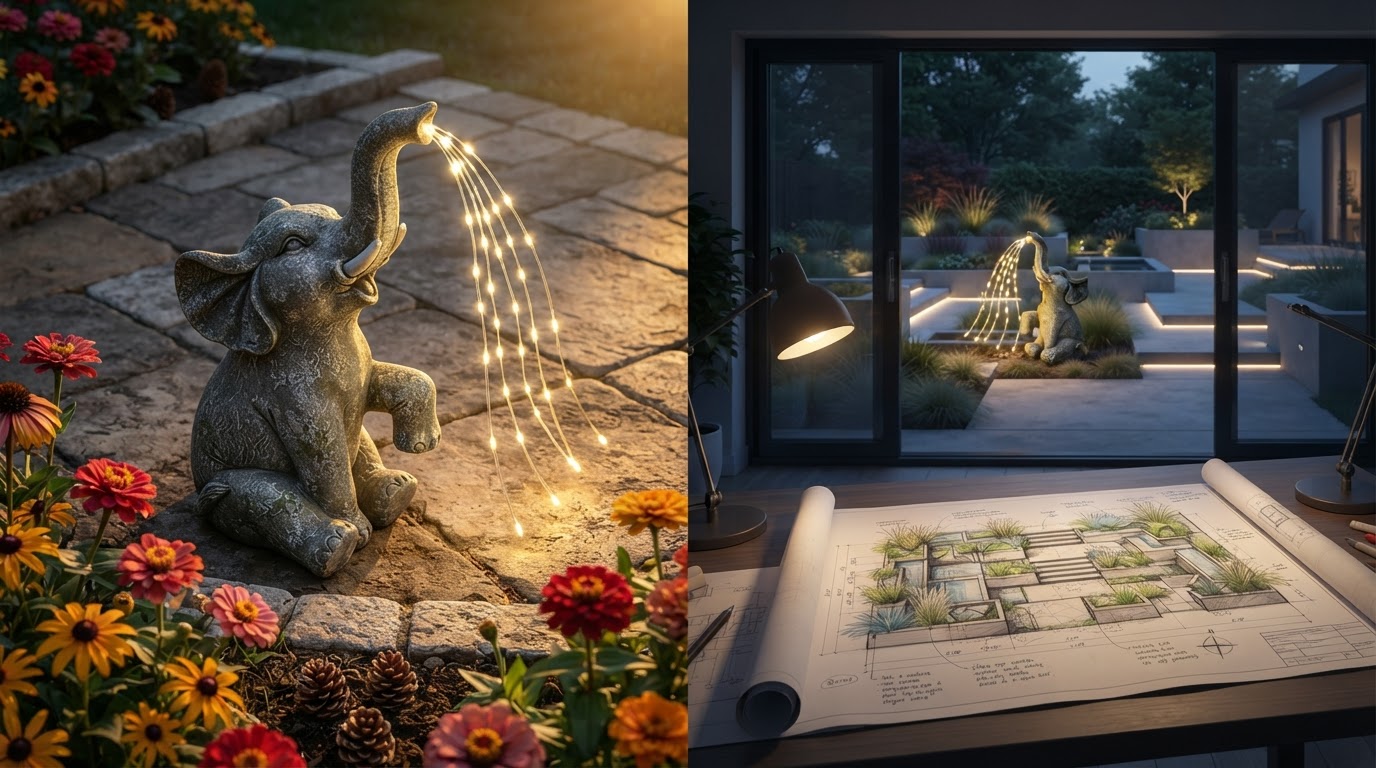
Solar Elephant Light Performance in Modern Landscapes
 Jordan HaleStaff Writer
September 12, 2026 — Recent shifts in sustainable landscape architecture have highlighted the Solar Elephant Light as a primary example of blending sculptural art with functional renewable energy.
I spent the afternoon watching the shadows lengthen across my patio, waiting for the precisely timed moment when the dusk sensors would kick in. The first thing I noticed was the weight of the resin; it felt substantial, unlike the hollow plastic alternatives that often tip over in a light breeze. According to industry standards for outdoor electrical enclosures, a high IP rating is essential for ensuring that internal photovoltaic components remain functional through seasonal shifts in moisture and temperature.
The Solar Elephant Light Integration Framework
Photo by 🇻🇳🇻🇳Nguyễn Tiến Thịnh 🇻🇳🇻🇳 on Pexels
Setting up the Solar Elephant Light requires a basic understanding of light saturation and placement. Somewhere around week two, I realized that the placement of the internal monocrystalline solar panel is optimized for high-angle sun exposure, which means tucking it under a dense canopy will significantly reduce its nighttime output. In my testing, a full eight-hour charge cycle resulted in a consistent warm glow that lasted well into the early morning hours, providing enough ambient light to define the perimeter of a garden bed without the harsh glare of traditional floodlights. The statue serves as a focal point during the day, but its true utility emerges at night when the light creates a silhouette that adds depth to the landscape. When considering an outdoor solar elephant statue, the texture of the surface matters just as much as the bulb; the weathered finish on this model diffuses light in a way that feels organic rather than industrial. Integrating these pieces into solar elephant garden lights schemes allows for a layered aesthetic that works in both minimalist and maximalist settings. I keep coming back to the way the light interacts with low-lying ferns, a technique often discussed in Solar Elephant Light garden design frameworks. Proper placement ensures that the statue complements other solar elephant garden lights rather than competing with them for visual dominance.
Expert tip: To maximize the lifespan of the internal battery, wipe the solar cell with a damp microfiber cloth once a month to prevent dust buildup from blocking UV absorption.
It turns out that the most effective garden designs are those that treat light as a living element of the architecture.