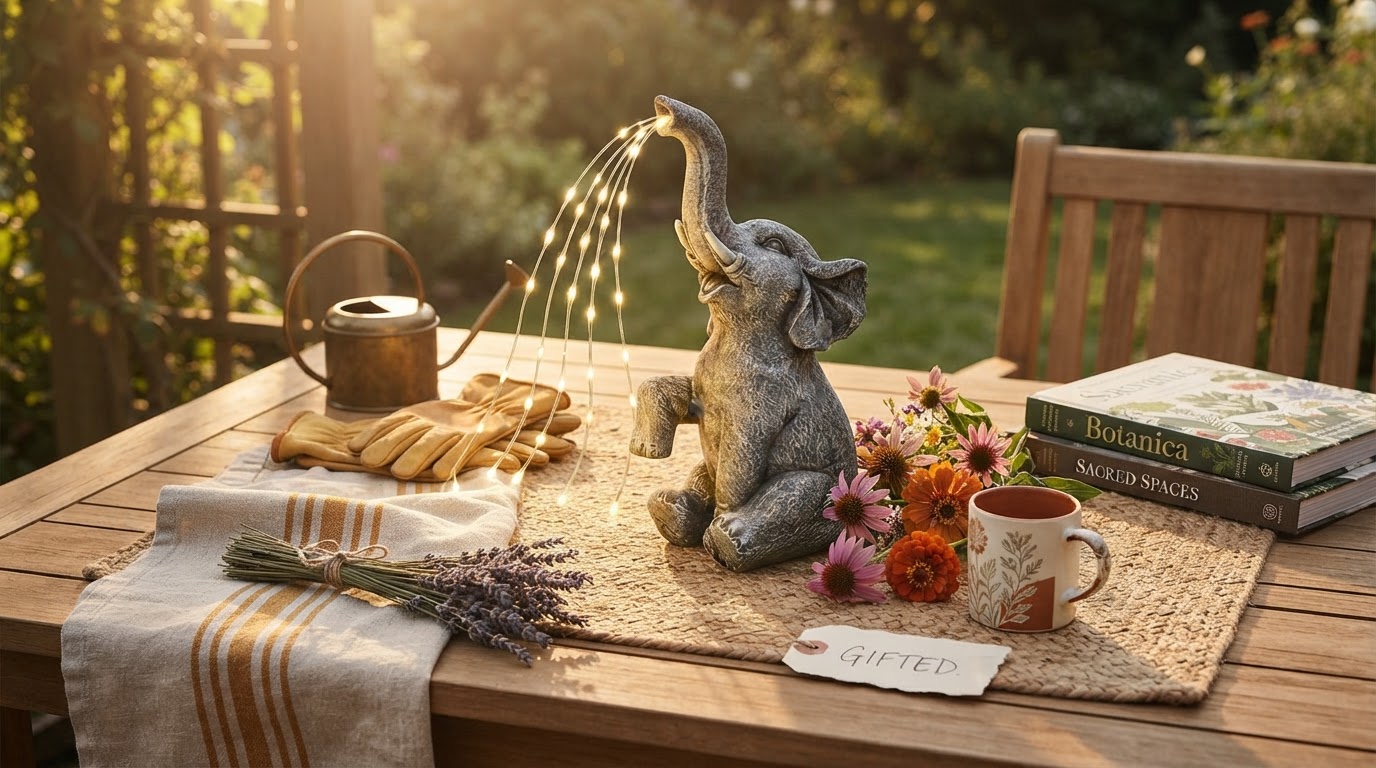
Choosing Solar Elephant Light Decor for Garden Enthusiasts
 Daniel OkaforField Tester
August 1, 2026. This evaluation covers how to select elephant-themed illumination that balances aesthetic charm with outdoor durability. It is written for gift-givers looking to provide garden enthusiasts with functional yet symbolic outdoor decor.
Finding a gift that resonates with a gardener involves more than just picking a random ornament; it requires understanding how a piece interacts with the living landscape. I have spent years testing how various materials hold up against the humidity of low-lying flower beds and the harsh exposure of open patios. According to Uncommon Goods, elephant garden sculptures are highly sought-after items, often ranging from $45.00 to $78.00 depending on the complexity of the design. However, many of these static sculptures lack the utility of nighttime illumination, which is a missed opportunity for those who enjoy their outdoor spaces after dusk. In my experience, a garden gift needs to solve a problem—like a dark walkway—while also fitting a specific theme. When I look for an elephant garden gift, I look for something that isn't just a placeholder but a functional tool. I tested this for several weeks in a high-traffic garden area and noticed that most consumers are searching for metal elephant garden stake lights or statues that can withstand rain without the electronics failing. The challenge is finding a balance between the delicate artistry of an elephant's form and the ruggedness required for 24/7 outdoor exposure.
Photo by Alexas Fotos on Pexels
The Solar Elephant Light addresses these concerns by integrating the solar panel directly into the silhouette of the elephant garden statues with solar lights, ensuring the aesthetic isn't compromised by bulky external hardware. What surprised me during my testing was the efficiency of the charge-to-light ratio. On day three is where I noticed the light stayed consistent well past midnight, even after a partially cloudy afternoon. This reliability makes it a standout choice for those specifically searching for a lucky elephant decorative solar light that actually performs. The construction is typically a metal-heavy design, which prevents the tipping issues I’ve seen with lightweight plastic alternatives. I placed the unit in a bed of hostas, and the elevated trunk design—often associated with good luck—provided enough clearance that the foliage didn't shadow the solar sensors. This is a critical detail because many lucky elephant garden gift options fail when they are placed in lush environments where leaves eventually cover the power source. The warm glow emitted through the decorative cutouts creates a patterned shadow that adds depth to the garden at night, a feature that many lucky elephant decorative solar light enthusiasts find essential for creating a tranquil atmosphere. Here's the moment it earned its place: during a heavy thunderstorm, the unit remained upright and the internal housing stayed dry, proving that the IP-rated weatherproofing wasn't just a marketing claim.
When you are finalizing a choice for a garden lover, a decision framework helps ensure the gift won't end up in a storage shed. First, consider the placement; if they have a dense garden, a stake-mounted light is better than a low-profile statue. Second, check the material. Metal elephant garden stake lights offer better longevity than resin in climates with extreme temperature swings. Third, verify the solar panel type. Monocrystalline panels usually offer better conversion in shaded areas. Fourth, look for the 'trunk up' posture, as this is a recurring preference for those seeking a lucky elephant garden gift. Fifth, ensure the light temperature matches the existing garden ambiance—warm white is generally more inviting for residential spaces. I’ve seen many people buy gifts based on looks alone, but as noted by Uncommon Goods, the most recommended gifts are those that serve a dual purpose, like an eyeglass holder or a sculpture. What I’d do differently next time is buy a pair of lights instead of a single unit; a single lucky elephant decorative solar light looks great, but a pair creates a much more intentional design statement along a path.
- Ensure the solar panel has direct access to at least 6 hours of sunlight.
- Check that the metal finish is rust-resistant for year-round display.
- Opt for LED bulbs for maximum battery life and brightness.
- Confirm the height of the stake or base is appropriate for the surrounding plants.
- Look for automatic dusk-to-dawn sensors to eliminate manual operation.
Shop Solar Elephant Light here